![[APHA]](/images/logo_apha.svg)
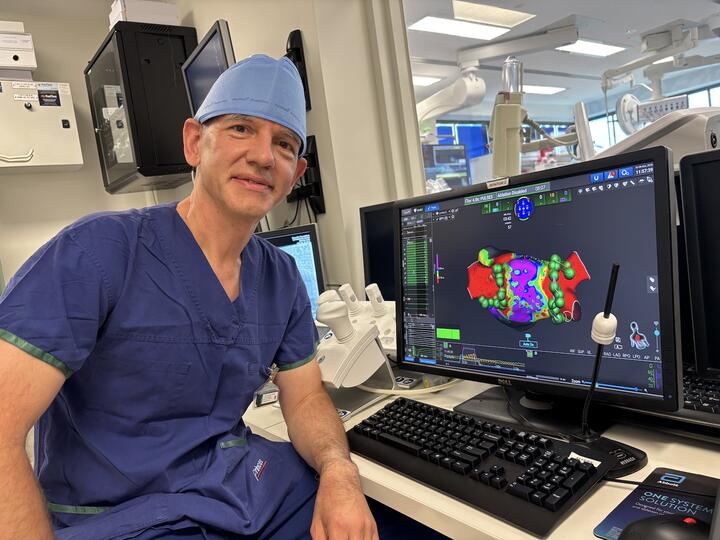
People with a potentially fatal heart rhythm disorder can now be treated using new technology that reduces reliance on daily medication and speeds up treatment.
Atrial fibrillation (AF) affects up to half a million Australians and occurs when the upper chambers of the heart beat out of rhythm with the lower chambers.
Blood is not pumped efficiently to the rest of the body, causing an unusually fast heart rate, quivering, or thumping sensations in the heart.
Previously, AF was treated by heat or cold ablation.
With the new state-of-the-art system now available at Epworth Richmond in Melbourne, a catheter is inserted via the leg up to the heart to deliver pulsed-field energy to destroy abnormal cells causing the arrhythmia.
High-definition 3D-mapping technology means the tissue can be precisely treated.
Epworth Richmond started using Medtronic's Affera Cardiac Mapping and Ablation System in February 2026.
Dr Andrei Catanchin, a heart rhythm specialist cardiologist, said it was already having a dramatic impact.
"This technology is an important upgrade to treat atrial fibrillation," he said.
"Procedures can take just an hour, compared with up to four hours, which means less time under anaesthesia.
"Recovery may also be faster with some patients returning to work after several days, and we expect it will allow many patients to reduce amounts of medication which often have side effects. It may also prevent clot formation which can be a risk for patients."
The common symptoms of AF include feeling breathless, feeling faint, dizzy or lightheaded, racing heart, tiredness or weakness, chest discomfort and difficulty exercising.
If left untreated, it can increase the likelihood of stroke by up to five times, and results in higher rates of cardiovascular admissions to hospital, reduced quality of life, and in some cases, heart failure.
One of the first patients treated using the new system at Epworth was Jennifer Flanagan, 72.
The grandmother of six said this time she felt no chest discomfort or pain after the procedure.
"The previous treatments used heat which caused some burning and discomfort afterwards, but this time I felt no pain at all," said Ms Flanagan, who has had AF since 2001.
"I can feel a difference. Time will tell but my chest just feels calmer and I'm back doing all the active things I love."
Read more: Valve innovation 'lowers chance of heart failure'
Read more: 'Myth-busting' heart device at Epworth
Next News And Innovation:
8/6/2026 World-first trial for advanced cancer treatment
Previous News And Innovation:
5/5/2026 Australian-first robot arrival benefits Epworth patients