![[APHA]](/images/logo_apha.svg)
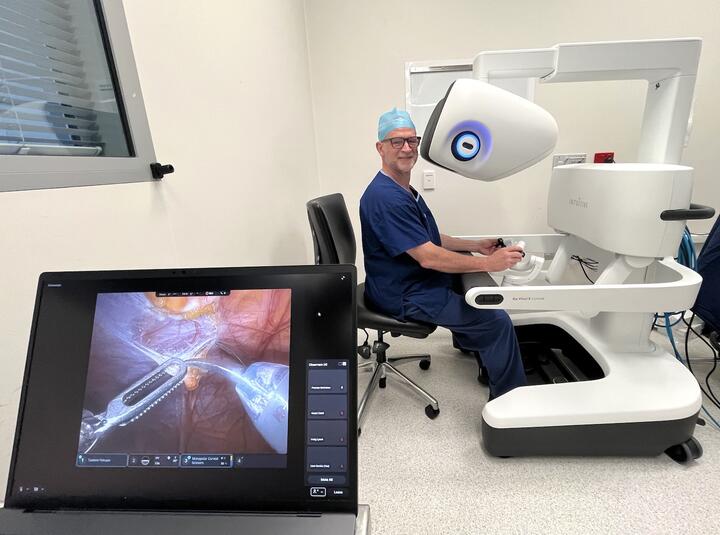
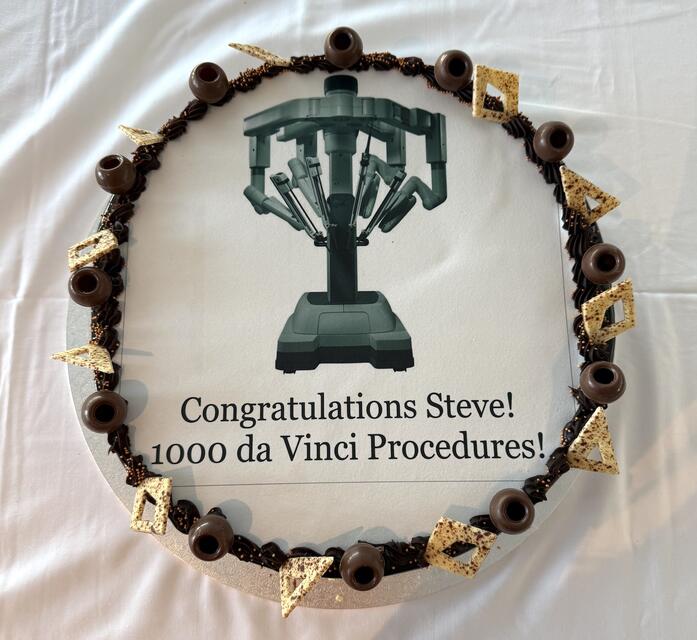
Sydney Adventist Hospital has marked a special milestone, with Associate Professor Stephen Pillinger performing his 1,000th robotic procedure using the da Vinci surgical system.
A/Prof Pillinger first used the system – now in its fifth generation – back in 2013.
"Everything we do with the da Vinci system is monitored with an app, it gives you all your stats," he said.
"So, I had known the 1,000th one was coming up – and then suddenly, it arrived."
He said the app used by surgeons with the da Vinci system was remarkable.
"It's really important data that has multiple uses," A/Prof Pillinger said.
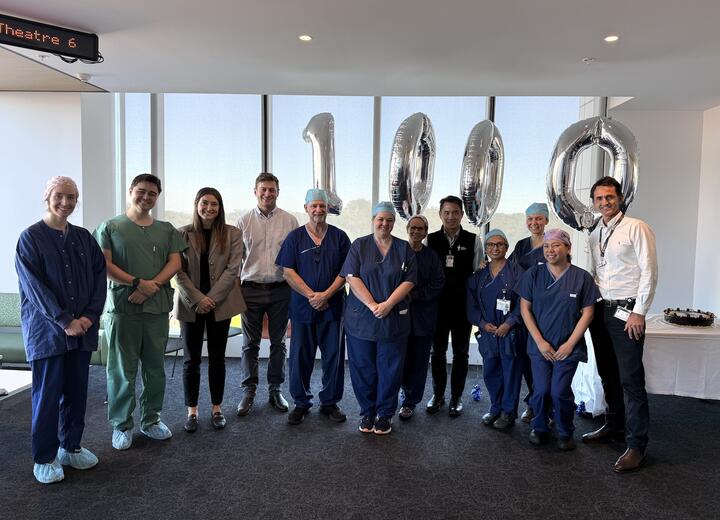
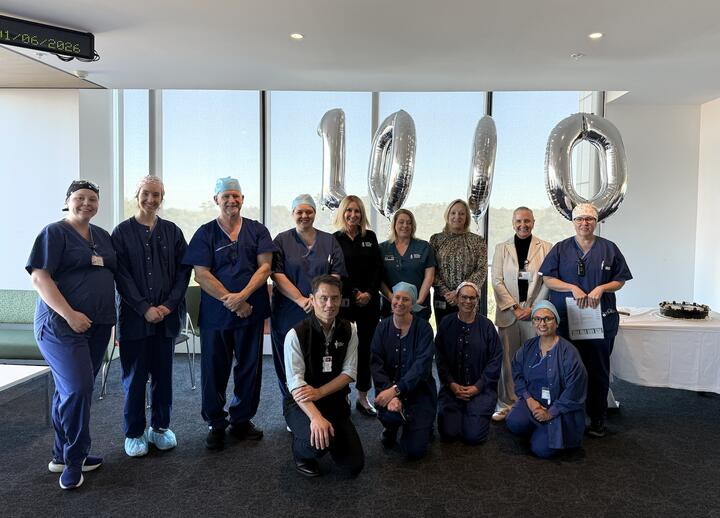
The San theatre team celebrated A/Prof Pillinger's 1,000th robotic procedure with a da Vinci system
"With the new one, you can watch procedures back within seconds, and you can show patients. If something happens during the surgery you can scroll back through and see where, what has happened, and how to fix it.
"It's extraordinary. I'm of the age of surgeons where I've gone from largely open practice to now almost exclusively doing robotic surgery. It's been a huge change in a short space of time."
A/Prof Pillinger's milestone procedure was also the first use of the telepresence capability on the new da Vinci 5 system, making New South Wales' largest private hospital – also known as the San – the first in the Southern Hemisphere to use the technology.
The telepresence feature enabled five of A/Prof Pillinger's surgical peers to tune in remotely and observe the procedure in real time, demonstrating the enormous potential for future training, mentoring and collaboration between surgeons across Australia and around the world.
"The telepresence feature is very cool," A/Prof Pillinger said.
"And from a private health perspective, where clinicians are time poor, you don't have to leave your practice for two days to watch a procedure, you can watch what we do in real time.
"It's a closed system, and you can invite a maximum of five surgeons.
"They can watch through an online portal, or on the app on their phone. The implications for learning and teaching are amazing; this will just go exponential.
"And for accreditation as well – if a hospital needs accreditation requirements, for example if there's a certain number of surgeries clinicians need to observe each year, you can do it this way.
"It's a game-changer in terms of learning and accelerated learning."
A/Prof Pillinger said surgeons being able to perform procedures remotely was the next stage of development in robotic surgery.
"The next stage of this technology, which is already happening around the world, is telesurgery. Meaning, if I'm observing a procedure in Mt Isa for example and something happens, I can take over," he said.
"That is already happening – we've had a surgeon in Florida, and the patient in Angola.
"As long as you have the bandwidth, it's possible.
"It has huge implications for rural and remote patients, being able to stay local and have their family there, their friends there, and still have the same standard of care you would get in a major city.
"It costs less, and they're back to their lives quicker."
A/Prof Pillinger said the patient outcomes from robotic surgery were a huge improvement.
"I can only speak for my specialty, colorectal surgery, but the outcomes for patients are so much better," he said.
"The recovery is better, there's less pain, and patients are back to their lives quicker. There's been a 10-fold reduction in complications."
A spokesperson for the San said the milestone of 1,000 robotic procedures was a testament not only to A/Prof Pillinger's expertise and dedication, but "also to the skilled nursing, perioperative and support teams who work alongside him to deliver exceptional patient care every day".
Read more: State-first surgery at San increases shoulder options
Read more: San opens Australia's 'most advanced' neurosurgery theatre
Next News And Innovation:
2/7/2026 Major milestone for Noosa Hospital
Previous News And Innovation:
9/6/2026 New hospital to meet Victoria's rising mental health needs